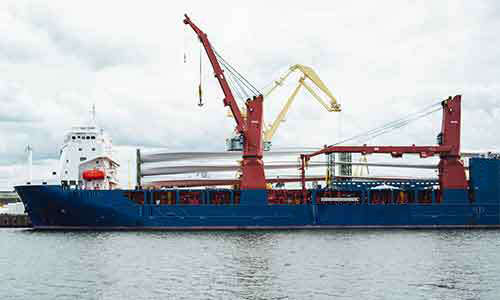
The UAE is one of India's busiest and most important trade partners, acting both as a major destination market in its own right and as a re-export hub for cargo moving onward across the Middle East and Africa. For Indian exporters, the India-UAE lane is usually one of the first international routes a growing business ships on — and one of the more forgiving ones to get right, provided you understand a few route-specific details up front.
This guide walks through how shipping from India to the UAE actually works in practice: which ports and modes to use, how long it really takes, what documentation customs on both sides expect, and where first-time shippers tend to lose time.
Why the India-UAE Trade Lane Matters
Jebel Ali Port in Dubai is one of the largest container ports in the world and functions as a major transshipment hub, meaning cargo landing there often continues onward to East Africa, the wider GCC, and parts of Europe. That makes the UAE a strategic gateway even for exporters whose end customer isn't based in the Emirates at all.
On the Indian side, Chennai Port and Chennai International Airport offer regular, well-established sailing and flight schedules to the UAE, making it one of the more reliable and predictable international lanes for Indian shippers — short transit times, frequent departures, and a mature customs process on both ends.
Ocean Freight vs Air Freight: Which to Choose
Most India-UAE shipments move by ocean freight, and for good reason: the crossing is short enough that the usual downside of sea freight — long transit time — barely applies. Ocean freight from Chennai to Jebel Ali or Dubai typically takes just 4 to 7 days, which is fast enough for most commercial cargo while remaining significantly cheaper than air.
Air freight from Chennai to Dubai or Abu Dhabi takes around 1 to 2 days including customs processing, and is worth the premium for time-critical, high-value, or perishable cargo — pharmaceuticals, fresh produce, or urgent spare parts, for example.
FCL vs LCL on the UAE Route
- FCL (Full Container Load) makes sense once your shipment approaches roughly 12-15 CBM, giving you sole use of the container and faster port handling
- LCL (Less than Container Load) suits smaller, regular shipments, and the India-UAE lane has frequent enough LCL consolidation that waiting times are usually short compared to less-travelled routes
Documents Required for Shipping to the UAE
The core documentation for an India-UAE shipment is the same as most international exports, with a couple of UAE-specific additions depending on the cargo:
- Commercial invoice and packing list, with quantities and values matching exactly
- Bill of Lading (ocean) or Air Waybill (air)
- Valid Import Export Code (IEC), registered with the DGFT
- Certificate of Origin, where required by the buyer or product category
- Product-specific UAE import certificates for regulated categories such as food, cosmetics, or electronics
Getting the invoice and packing list consistent across every document is the single most common thing that holds up clearance on this route — a mismatched HS code or quantity between the invoice and the Bill of Lading is usually enough to trigger a manual customs query on either side.
Typical Cargo on the India-UAE Lane
The route carries a wide mix of cargo — textiles and garments, machinery and spare parts, foodstuffs, building materials, and general trading goods bound for re-export further into the GCC or Africa. Because Jebel Ali functions as a free zone and re-export hub, it's also common for cargo to change hands or get re-packed there before continuing to its final market, which is worth factoring into your documentation if a UAE-based trading partner is involved.
Common Delays and How to Avoid Them
- Mismatched documentation — keep invoice, packing list, and Bill of Lading/Air Waybill details identical down to the last digit
- Missing product certificates — confirm UAE-side import requirements for your specific product category before booking, not after the cargo has sailed
- Peak season congestion — Jebel Ali is a high-volume hub, so booking space a few days earlier than usual around festive and year-end periods avoids last-minute rate spikes
- Unclear Incoterms — confirm upfront whether you're shipping FOB, CIF, DAP or DDP, since this determines who arranges UAE-side clearance and delivery
Working with a Freight Forwarder on This Route
Because the India-UAE lane is high-frequency and well-serviced, an experienced freight forwarder adds the most value in three places: securing competitive rates through regular carrier volume, catching documentation mismatches before they reach customs, and coordinating with UAE-side partners for smooth destination handling. Cloud Sea Shipping arranges both ocean and air freight from Chennai to the UAE, handling booking, export documentation, and customs clearance end to end.
